No Effective Measures to Prevent Lightning Strikes, Death Toll rising
- Post Time : Friday, May 16, 2025
Md. Nahid Hasan
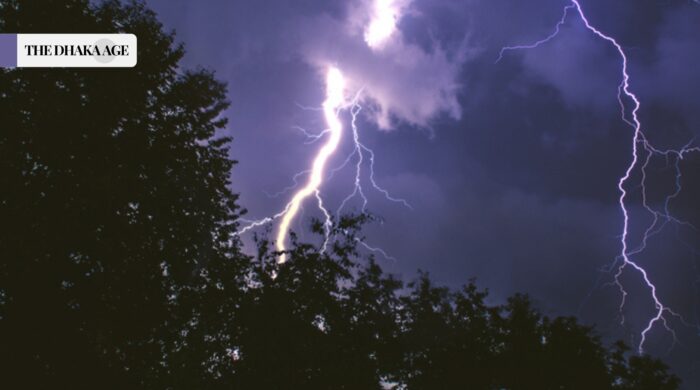
Due to its geographical location, Bangladesh is one of the countries most at risk of fatalities from lightning strikes. The number of deaths caused by lightning is increasing every year. Along with humans, many animals and birds are also losing their lives. In 2016, lightning was declared a national disaster. This year, the risk has intensified due to excessive heat. However, the Ministry of Disaster Management and Relief has yet to implement any effective project to prevent lightning strikes.
Meteorologists have stated that the period from April to early June is considered the most vulnerable time for lightning in Bangladesh. During this time of year, the country experiences the highest temperatures. The excessive heat results in the formation of large amounts of water vapor, which serves as the main source of energy for lightning. The more vapor there is, the more thunderclouds are formed, leading to frequent lightning strikes.
According to the Ministry of Disaster Management and Relief, 3,407 people have died from lightning strikes over the past 13 years, from 2011 to 2023. As of May 19 this year, 56 people have died and 13 have been injured. The highest number of fatalities occurred in Sylhet district, where 10 people lost their lives.
However, a recent report by volunteer organization Save the Society and Thunderstorm Awareness Forum states that 74 people died from lightning within just 38 days—from April to May 8. Among those who died, 35 were involved in agriculture.
Rashim Molla, the general secretary of the organization, said the death toll reported by the ministry is incorrect. “We see reports of lightning-related deaths every day in national media. We verify and collect our data from media sources. The ministry only uses information from DC offices and does not raise awareness among the public,” he said.
Experts have noted that the risk of lightning is increasing this year due to adverse weather conditions and extreme heat. Deforestation, especially the removal of tall trees from open fields, lack of preventive measures, and public unawareness are contributing to the rising death toll. Lightning has become a disaster that cannot be confined to a specific area, and Bangladesh still lacks the technology to do so, whereas developed countries have such capabilities.
Zakir Hossain, a climate change analyst and CEO of Change the Initiative, told Dhaka note, “The government is not actively raising awareness about the dangers or fatalities related to lightning. It’s crucial to identify the areas with the highest number of deaths. Just like the recent heatwave was mapped, lightning-prone areas should be identified using data from the past 10 years. Awareness and preventive measures must then be taken in those areas.”
He added, “Due to the lack of advanced technology, we cannot currently inform people in real time about possible lightning strikes in the next 30 minutes to an hour. This alert system needs to be developed urgently. If we fail to resolve this issue, we must consider offering incentives to farmers during the monsoon season to keep them from going into the fields. Human life has value, and the administration must recognize that.”
Gawher Nayeem Wara, Director of the Disaster Management and Climate Change Program at BRAC, told Dhaka note , “Most of the people who die from lightning are poor. Our administration does not pay enough attention to their deaths. They lack awareness. They don’t care if working-class people die. That’s the main reason behind the continuing death toll. Even after someone dies, there is no follow-up. Any solution project must involve those who are most affected or most at risk.”
Lightning-Prone Areas in Bangladesh
Meteorologists have identified the northern, northeastern, and northwestern parts of Bangladesh as the most lightning-prone areas. Based on observations, Netrokona, Kishoreganj, Sunamganj, Moulvibazar, Habiganj, Sylhet, as well as Tangail, Jamalpur, and Mymensingh are considered high-risk zones.
Time of Year When Lightning Strikes Are Most Frequent
Lightning is most frequent in the pre-monsoon and monsoon seasons, typically between March and October. The highest number of deaths occurs from April to June. As this coincides with the peak agricultural season, the risk of death among farmers is higher. Research shows that Bangladesh experiences over 8.4 million lightning strikes annually, with 70 percent occurring between April and June.
No Effective Projects in Place
While deaths from floods and cyclones have decreased in recent years, the Ministry of Disaster Management and Relief has not taken effective steps against lightning—a sudden and deadly hazard. In 2016, after the Prime Minister declared lightning a disaster, the Disaster Management Department planned to plant one crore palm trees across the country during the 2017–18 fiscal year to reduce lightning deaths. However, after planting 3.8 million saplings, most died due to neglect within a year. The project cost nearly Tk 100 crore.
Officials from the ministry said the palm tree project did not progress after 2022 and was later abandoned. On May 11, 2022, the then State Minister for Disaster Management, Enamur Rahman, said at a press briefing that the tree-planting initiative had been canceled, as it takes 30 to 40 years for a palm tree to grow, which makes the initiative impractical.
Currently, the Disaster Management Department is working on a Tk 1,321 crore project to reduce fatalities from lightning. Under this project, lightning arresters will be installed and shelters will be built. The department has proposed installing 6,793 lightning arresters and constructing 3,398 shelters in 15 districts.
However, disaster management expert Gawher Nayeem Wara questioned the effectiveness of such projects. “These projects are designed more for earning money than saving lives. There is no long-term planning. People in high-risk areas are not being made aware. Building shelters won’t reduce deaths. Since farmers are dying the most, we need to sit with them and figure out how to protect them. Also, cutting down big trees must stop. In haor areas, shelter zones must be established so that farmers can take cover as soon as warning signs appear,” he said.
Dr. Shahidul Islam, Director of the Disaster Research Training and Management Centre at the University of Dhaka, told Dhaka note, “To address any crisis, we need short-, medium-, and long-term plans. We are not doing that. If short-term plans turn into long-term ones, it won’t work. People are dying every day. Alongside large projects, we must prioritize low-cost solutions like closely monitoring the public. Lightning tends to occur at fixed times—mostly in the afternoon. Awareness during that time is crucial.”
He added, “Another important step is providing forecasts. Once signs appear, people must be forced to move to safety. From the highest levels of administration to the union level, all officials must play their part. Initiatives must be taken to motivate people.”
What the Disaster Management Department Says
The lack of effective steps to prevent lightning has also been acknowledged by Md. Mizanur Rahman, Director General of the Department of Disaster Management. He told Dhaka note, “We currently have some ongoing work under the lightning arrester project. Other than that, I’m not aware of any projects. If we take up a project, it should yield results. For now, we’re working on this.”
When asked about the previously launched palm tree project, he said, “The idea that planting palm trees can protect against lightning is not scientifically valid. It takes 30 to 40 years for a tree to mature. Planting trees alone cannot prevent lightning. That’s why that project is no longer active.”
So why was the palm tree planting project launched in 2017 with the goal of planting 4 million trees to prevent lightning? In response, he said, “I don’t know the specifics of that project. At the time, it probably seemed like a good idea. I don’t have data on how many trees were planted or where they were planted.”
When asked how many districts now have installed lightning arresters under the current project, he replied, “Many arresters have been installed. Some are operational, while others are not. I don’t have information on exactly how many districts currently have them.”
He added, “We are not able to provide forecasts quickly. I believe people working in the fields don’t need to be notified—they should leave once they see dark clouds and lightning. People should value their lives. If someone goes fishing or to work despite the danger, that’s a problem. We’ve seen that deaths are more common in haor areas because people are not aware. Even with arresters, they don’t cover a large area. Public awareness is more important. Once people see lightning, they must immediately seek shelter.”
When asked how effective the ongoing project would be in preventing lightning deaths, he said, “We are currently installing lightning arresters. Some projects are still under process at the planning commission. These machines are expensive and need to be imported. They can only serve within a specific area.”